

Webinar

Get updates in our blog: Oregon Elevator Code Update: A17.3 Planning Guide
Click below for additional information and updates.What You'll Learn:
- Identify signs that your equipment may need attention
- Prioritize repairs and practical improvements
- prepare for unexpected outages
- Build a longer-term equipment plan
Transcript
1
00:00:12.390 --> 00:00:15.889
Sara Korolevich: Welcome everyone. Thanks for joining.
2
00:00:16.860 --> 00:00:23.050
Sara Korolevich: We're going to get started in about a minute. We'll let everybody join.
3
00:00:24.420 --> 00:00:25.659
Sara Korolevich: Hang tight.
4
00:00:25.840 --> 00:00:27.190
Sara Korolevich: We'll get started in a minute.
5
00:01:10.160 --> 00:01:12.130
Sara Korolevich: Okay, let's get started.
6
00:01:12.990 --> 00:01:20.419
Sara Korolevich: Welcome everyone to VDA's webinar, Managing Campus Elevators, A Smarter Way to Take Control.
7
00:01:21.210 --> 00:01:29.060
Sara Korolevich: My name is Sarah Krolovich. I lead content and campaigns here at BDA, and I'm based in Phoenix.
8
00:01:29.570 --> 00:01:36.149
Sara Korolevich: Thanks again for joining us today, wherever you're joining us from across the United States. If you want to put in the chat where you're at.
9
00:01:36.710 --> 00:01:48.179
Sara Korolevich: maybe what university or college campus you're coming. You're joining us from. I know a lot of you are Vda clients. Thank you for being here. We appreciate it.
10
00:01:48.600 --> 00:01:56.800
Sara Korolevich: For those of you who may not be familiar with VDA, we're a vertical transportation consulting firm serving clients across the US.
11
00:01:57.190 --> 00:02:13.619
Sara Korolevich: Canada, and the UK. We help with elevator and escalator design for new construction and modernization projects for existing buildings, and we also provide inspection services to help teams stay in compliance with local codes and regulations.
12
00:02:14.740 --> 00:02:26.269
Sara Korolevich: Programs like this webinar are meant to help building owners and facilities teams manage their elevator portfolios, from understanding maintenance contracts to planning for modernization.
13
00:02:27.100 --> 00:02:28.430
Sara Korolevich: Alright.
14
00:02:29.620 --> 00:02:33.779
Sara Korolevich: I'm gonna go through, some housekeeping items really quickly.
15
00:02:34.250 --> 00:02:43.420
Sara Korolevich: Please use the Zoom chat for comments, reactions, and links. You'll find some resources there, too, from our team.
16
00:02:43.710 --> 00:02:55.450
Sara Korolevich: Use the Zoom Q&A box at the bottom of your screen to submit any questions. We will have a live session at the end of the presentation with our presenters.
17
00:02:55.930 --> 00:03:02.489
Sara Korolevich: If you want to use the live transcript button, click the CC button to enable closed captioning.
18
00:03:02.900 --> 00:03:13.330
Sara Korolevich: And just a reminder that yes, we will be sharing the recording of the presentation along with the slides after the webinar. You'll find those in your email.
19
00:03:15.160 --> 00:03:36.300
Sara Korolevich: Disclaimer, the information provided during this webinar is for general educational and informational purposes only. It does not constitute professional or legal advice. Attendees are encouraged to consult with a qualified professional regarding their specific situation before taking any action based on the information presented.
20
00:03:37.430 --> 00:03:40.309
Sara Korolevich: Alright, let's meet our presenters.
21
00:03:40.600 --> 00:03:44.100
Sara Korolevich: We have with us today Michael Burns.
22
00:03:44.290 --> 00:03:59.649
Sara Korolevich: Michael Burns has been with VDA for a year, about a year, and has more than 18 years in the elevator industry. As one of our business development managers, he works with higher ed and healthcare clients nationally.
23
00:04:00.560 --> 00:04:17.810
Sara Korolevich: Mike Nolan has been with VDA for 14 years and has more than 40 years in the elevator industry. As a vertical transportation consultant based in Miami, he works with clients in health care, college and universities, and hotel industries.
24
00:04:17.910 --> 00:04:21.979
Sara Korolevich: Thank you for being our presenters today, Michael and Mike.
25
00:04:23.610 --> 00:04:32.949
Sara Korolevich: All right, here's what we're going to go over today, our agenda. We're going to take a look at elevators and why they're such a critical campus infrastructure.
26
00:04:33.490 --> 00:04:36.750
Sara Korolevich: A look at understanding maintenance contracts.
27
00:04:37.010 --> 00:04:40.240
Sara Korolevich: Knowing when modernization is the right move.
28
00:04:40.440 --> 00:04:47.849
Sara Korolevich: building a proactive oversight strategy. And then, as I mentioned, closing with a live Q&A session.
29
00:04:50.040 --> 00:04:53.649
Sara Korolevich: First, we want to start off with a quick poll.
30
00:04:53.760 --> 00:04:58.209
Sara Korolevich: If you wouldn't mind getting that started for us, Tommy.
31
00:04:59.710 --> 00:05:05.159
Sara Korolevich: All right. What is your biggest challenge with campus elevators right now?
32
00:05:05.580 --> 00:05:08.669
Sara Korolevich: Managing maintenance issues and callbacks.
33
00:05:09.440 --> 00:05:12.750
Sara Korolevich: Planning for modernization or aging equipment.
34
00:05:13.320 --> 00:05:17.420
Sara Korolevich: Understanding contract terms and service expectations.
35
00:05:18.000 --> 00:05:21.610
Sara Korolevich: Staying compliant with codes and accessibility requirements.
36
00:05:22.110 --> 00:05:25.199
Sara Korolevich: or securing budget or leadership buy-in.
37
00:05:25.810 --> 00:05:28.340
Sara Korolevich: Give you a few seconds here to.
38
00:05:29.280 --> 00:05:32.880
Sara Korolevich: answer that poll, and I'll share the results with you.
39
00:05:37.020 --> 00:05:40.670
Sara Korolevich: Alright. Few more seconds. It looks like
40
00:05:41.700 --> 00:05:50.759
Sara Korolevich: Definitely planning for modernization or aging equipment is in the lead, followed by managing maintenance issues and callbacks.
41
00:05:51.090 --> 00:05:55.960
Sara Korolevich: All right, if everybody's had a chance to vote, I'm going to go ahead and end the poll.
42
00:05:57.860 --> 00:06:00.010
Sara Korolevich: and share the results here.
43
00:06:01.330 --> 00:06:17.510
Sara Korolevich: Yes, planning for modernization or aging equipment, that is something we're going to touch on. Mike Nolan will share some information about that, as well as managing maintenance issues and callback. All right, I'm glad you all are joining us here for the webinar.
44
00:06:19.560 --> 00:06:21.560
Sara Korolevich: Let's see.
45
00:06:22.180 --> 00:06:28.110
Sara Korolevich: All right. I'm going to go ahead and pass it over to Michael Burns.
46
00:06:28.270 --> 00:06:35.069
Sara Korolevich: who's going to talk a little bit about recognizing elevators as critical campus infrastructure. Michael.
47
00:06:36.200 --> 00:06:40.059
Michael Burns: All right, good morning, good evening, or excuse me, good afternoon, everyone.
48
00:06:40.060 --> 00:07:01.029
Michael Burns: I'm really excited to be here today and just wanted to thank everyone for joining today. I thought it'd be just a great way to kick off the webinar by talking about how critical elevators are to campus infrastructure and overall campus operations, as you all are aware, and probably one of the main reasons why you're on today's call.
49
00:07:01.030 --> 00:07:06.920
Michael Burns: Also wanted to start out by just how unique universities and higher ed facilities are.
50
00:07:06.920 --> 00:07:13.739
Michael Burns: You know, most of the campuses have dozens, if not hundreds of buildings that make up the campus.
51
00:07:13.740 --> 00:07:36.110
Michael Burns: They're also extremely diverse as well. You know, certainly you have classrooms and resident halls, but you also have dining courts. You know, if you have an athletic department, you know, I'm sure there's a lot of sporting events throughout the year. You know, certainly a lot of social activities, alumni events, as well as, you know, potential for, for medical research facilities as well.
52
00:07:36.110 --> 00:07:39.759
Michael Burns: So certainly very unique and very diverse.
53
00:07:39.760 --> 00:07:49.890
Michael Burns: These are also extremely high traffic environments. You know, there's a lot of people that are in and out of these buildings on a daily basis.
54
00:07:49.890 --> 00:07:59.820
Michael Burns: And having operating and reliable elevator infrastructure is just so critical to the overall campus operations.
55
00:07:59.820 --> 00:08:05.190
Michael Burns: you know. Certainly accessibility and Ada is of the utmost importance.
56
00:08:05.190 --> 00:08:19.640
Michael Burns: You know, the people that rely on, you know, services as well as the elevators to get, you know, in and out of a building and being able to access, you know, different floors within the property is so, so important.
57
00:08:19.740 --> 00:08:30.240
Michael Burns: And really wanted to mention just campus experience as a whole, you know, for whoever's on the campus at any given time, whether it's students or people visiting.
58
00:08:30.240 --> 00:08:43.670
Michael Burns: or even the staff and faculty, you know, I think the basic expectations a lot of time is that, you know, in the summertime, that the air conditioner is working properly, or, you know, when it's cold out, that the heating is working.
59
00:08:43.669 --> 00:08:48.850
Michael Burns: You know, students these days, I would imagine that they're wanting access to
60
00:08:49.550 --> 00:09:04.910
Michael Burns: reliable Wi-Fi services. And I think, you know, elevators are also in that bucket where, you know, when everything on the campus is operating as intended, I think it's just generally a positive experience for those that are on the campus.
61
00:09:05.160 --> 00:09:15.990
Michael Burns: you know. Lastly, building security. You know, we understand a lot of the elevator systems are tied into the the building security and providing secure access to
62
00:09:16.040 --> 00:09:31.959
Michael Burns: you know, a lot of the resident halls or the medical labs, and just the important role that elevators have in, you know, that secure asset or access, as well as just a general safety aspect for these buildings. We can go to next slide.
63
00:09:34.210 --> 00:09:47.579
Michael Burns: Alright, so shifting gears, you know, when, you know, you guys know when things go wrong, you know, there's a high cost of downtime. So when there's elevator issues, or maybe repeat calls, you know, unplanned downtime.
64
00:09:47.580 --> 00:10:06.410
Michael Burns: It really causes a lot of disruption for the overall campus operations. I was lucky to attend the Elevator U Conference recently in Quincy, Illinois, and sat through a lot of presentations as well as was able to interact with a lot of the facility leaders that handle
65
00:10:06.440 --> 00:10:22.449
Michael Burns: you know, small campuses and large campuses across the country. And, you know, it's amazing that a single elevator that's out of service or, you know, a single elevator that's outage can really cause a lot of disruptions for the campus operation.
66
00:10:22.450 --> 00:10:30.390
Michael Burns: You know, these are extremely busy buildings. There's a lot going on, throughout the day. You know, certainly you have classes.
67
00:10:30.390 --> 00:10:47.359
Michael Burns: You know, majority of the time there's construction projects going on, you know, cleaning services, there's daily deliveries, and it really creates a lot of bottleneck when the elevator is out of service. You know, it diverts a lot of the resources away from planned work as well.
68
00:10:48.010 --> 00:11:00.890
Michael Burns: And, you know, unexpected costs and emergency premiums. You know, I like to think, you know, if you have a campus building, maybe there's one elevator in the building, or maybe there's just a critical unit within that space.
69
00:11:00.890 --> 00:11:08.200
Michael Burns: You know, a lot of times you're going to be approving for overtime callbacks to try to get the elevator running as quickly as possible.
70
00:11:08.200 --> 00:11:16.690
Michael Burns: You know, maybe, again, if it's a critical unit, you're gonna have the repair team complete the work on overtime, so you're gonna be incurring additional costs for that.
71
00:11:16.690 --> 00:11:28.889
Michael Burns: You know, certainly you're going to be expediting the components as best you can. And, you know, these unexpected costs and premiums, they really impact your overall annual budget as well.
72
00:11:29.670 --> 00:11:37.200
Michael Burns: and student experience. I kind of talked about this on the last slide with the you know, the campus experience. But you know, students are paying
73
00:11:37.270 --> 00:11:46.739
Michael Burns: a lot of money for their education, and, you know, when the HVAC system's not working, when the elevator isn't working, they're taking the stairs.
74
00:11:46.790 --> 00:12:01.009
Michael Burns: I think it truly impacts the overall perception that the students have of the campus. You know, certainly if there's delays in classroom, like I mentioned, if they're, you know, having to access the building on a daily basis.
75
00:12:01.010 --> 00:12:11.089
Michael Burns: through the stairwell. If they have accessibility challenges, I think it just causes a lot of frustration and really impacts their overall perception of the campus.
76
00:12:11.950 --> 00:12:30.010
Michael Burns: And lastly, safety and liability. You know, when you're dealing with elevator issues and, you know, callbacks, certainly there's always an increased risk for passenger entrapments as well. And, you know, it's the potential to lead to legal claims, as well as units that are left down for,
77
00:12:30.010 --> 00:12:38.079
Michael Burns: a longer period of time, you've got risk of fines or even violations, as a result of that. So I'll now pass it to Sarah.
78
00:12:39.780 --> 00:12:52.789
Sara Korolevich: Thank you, Michael. Thanks, Michael. All right, we're going to keep going. I'm gonna pass it over to Mike Nolan, who's gonna talk a little bit about understanding your elevator maintenance contracts. Mike?
79
00:13:04.250 --> 00:13:18.770
Mike Nolan: hello everybody I'm Mike Nolan nice to be with you all and joining us on this webinar I've been in obviously the elevator industry for a long time 40 years and been with VDA for 14 I'm also a third generation guy so
80
00:13:18.770 --> 00:13:24.270
Mike Nolan: Family's been in elevators forever. Anyway, I want to talk a little bit about maintenance contracts.
81
00:13:24.300 --> 00:13:36.330
Mike Nolan: Oem contracts, which is, you know, equipment, original equipment manufacturers, or I prefer to call elevator main, contractor agreements.
82
00:13:36.600 --> 00:13:39.090
Mike Nolan: You know.
83
00:13:39.580 --> 00:13:51.460
Mike Nolan: I don't want to see most people do the actual elevator contractors contracts because it protects them more than it does the client, which is you guys.
84
00:13:51.460 --> 00:14:00.049
Mike Nolan: And, you know, the obsolete language is excluded from contracts. Parts are very limited to what they're going to cover under your contracts.
85
00:14:00.140 --> 00:14:01.380
Mike Nolan: Now I'm.
86
00:14:01.510 --> 00:14:12.130
Mike Nolan: Obsolescence, obviously, is an issue, which we'll talk a little bit more about that later. The legal terms, there's a lot of stuff that gets involved, and like.
87
00:14:12.780 --> 00:14:30.500
Mike Nolan: during a maintenance, OEM maintenance agreement, a lot of times, something's not covered, and they're going to give you a proposal to fix it, because it wasn't covered under the contract. The margins on repair is astronomical, sometimes 40, 60, and 80% margins on these proposals.
88
00:14:31.910 --> 00:14:49.080
Mike Nolan: Now, consultant full maintenance agreement, that's a little bit different. If like VDA was to do the maintenance agreement, we would protect you on everything throughout the whole thing. What parts are being covered, you know, whether it be machines, generators, door equipment, all that stuff will be typically covered under maintenance contract.
89
00:14:49.250 --> 00:14:57.669
Mike Nolan: We also talk about service calls, how long, what they're supposed to be doing maintenance-wise, monthly, typically.
90
00:14:57.670 --> 00:15:11.970
Mike Nolan: in a VDA language, we would have them do one hour a month for strictly hydraulic, two hours a month for per traction elevator, and then we can follow what they're doing throughout the maintenance contract to protect you guys. Response times are critical.
91
00:15:12.850 --> 00:15:14.970
Mike Nolan: elevator companies
92
00:15:15.270 --> 00:15:29.609
Mike Nolan: talk about periodic, maintenance in their contracts. We're telling them, no, your response times need to be… or your, maintenance needs to be done monthly, and… and so many hours per elevator.
93
00:15:29.740 --> 00:15:38.770
Mike Nolan: And response times are critical, so our language in that document will also tell them they gotta be here. If a car goes down, they gotta be here in an hour, hour and a half.
94
00:15:38.960 --> 00:15:41.480
Mike Nolan: Two hours on weekend, depending upon your situation.
95
00:15:41.720 --> 00:15:45.160
Mike Nolan: But that's pretty much how maintenance contracts are.
96
00:15:45.260 --> 00:15:50.930
Mike Nolan: My… obviously, my opinion is go consultant. It's gonna protect you at some point.
97
00:15:51.100 --> 00:15:52.150
Mike Nolan: Next slide.
98
00:15:54.950 --> 00:16:02.980
Mike Nolan: Five common provisions that put you at risk. Okay. Contracts. Typical OEM contract.
99
00:16:03.320 --> 00:16:20.049
Mike Nolan: Since a 3-year or 5-year contract, it… you look at the deadline, a lot of times they have that language in there that says rollover, which means if you're not paying attention 30, 60, 90 days, depending on what the language says, it can automatically rollover for an additional 5 years, and sometimes you don't even know what happened.
100
00:16:20.530 --> 00:16:24.190
Mike Nolan: So that language would be removed if we decide to help you with it.
101
00:16:24.570 --> 00:16:28.210
Mike Nolan: Frequencies, maintenance, periodic.
102
00:16:28.340 --> 00:16:33.999
Mike Nolan: Again, periodic means, in my opinion, whenever they feel like it. There's no way to determine.
103
00:16:34.110 --> 00:16:36.389
Mike Nolan: If your elevators are…
104
00:16:36.640 --> 00:16:44.200
Mike Nolan: Being maintained without going and doing evaluations to find out. But most of these contracts have periodic or systematic maintenance.
105
00:16:44.700 --> 00:16:49.559
Mike Nolan: Service calls, response times. Again, we want to know
106
00:16:50.010 --> 00:16:54.780
Mike Nolan: When they're going to be on the job, if you get a car shut down, it needs to be repaired immediately.
107
00:16:55.220 --> 00:17:00.930
Mike Nolan: Parts, coverage, storage… That's another thing.
108
00:17:01.230 --> 00:17:08.430
Mike Nolan: A lot of times the elevator companies don't have the parts there. They're going to say they're going to fix them, but it could take a week, two weeks, three weeks to get parts
109
00:17:08.630 --> 00:17:27.059
Mike Nolan: We typically would like to see parts, your average parts, like door equipment, cart rollers, pickup rollers, stuff that doors, because doors on an elevator are probably 80% of your shutdowns because they're not being maintained. But to have the parts there will just help it get fixed quicker. Typically, that doesn't happen.
110
00:17:28.580 --> 00:17:30.220
Mike Nolan: Next slide.
111
00:17:33.310 --> 00:17:35.819
Mike Nolan: Okay, understanding obsolescence.
112
00:17:35.980 --> 00:17:42.450
Mike Nolan: So… Obsolescence is, is, is, has been a tough category lately because.
113
00:17:42.640 --> 00:17:53.099
Mike Nolan: The OEMs who make majority of the elevator equipment in the world, typically a life cycle of an elevator before it needs to be considered for modernization is 20, 25 years.
114
00:17:53.310 --> 00:18:04.500
Mike Nolan: And that's basically saying, hey, we don't build these controller boards anymore. All the equipment associated with your elevators is not available anymore. Can't find parts, so on.
115
00:18:04.860 --> 00:18:11.540
Mike Nolan: Was 20, 25 years. Now we're seeing it being shrunk down to sometimes 12 years. A lot of door operators.
116
00:18:11.740 --> 00:18:15.440
Mike Nolan: are being discontinued at 12 years.
117
00:18:15.870 --> 00:18:21.480
Mike Nolan: Unfortunately, the life cycle is probably 15 to 20 years would be a little bit more accurate now.
118
00:18:21.800 --> 00:18:30.130
Mike Nolan: And obviously, that's probably because, you know, I hate to say it, but elevator manufacturers probably want to sell more equipment, so they're reducing their
119
00:18:30.480 --> 00:18:33.810
Mike Nolan: Obsolescence lifespan, for that.
120
00:18:34.390 --> 00:18:38.729
Mike Nolan: And then, on downtime and, unexpected costs.
121
00:18:39.420 --> 00:18:53.199
Mike Nolan: If you have it on your main, there's no way of knowing when you're going to get the parts. So like a VDA, FMA, or modernization document, we'll talk about obsolescence. We have it very, very, very strict obsolescence language.
122
00:18:53.270 --> 00:19:00.739
Mike Nolan: in there that will help protect the client on their elevator, especially campuses. I know how campuses non-stop move, so…
123
00:19:00.990 --> 00:19:05.429
Mike Nolan: That's, that's on the obsolescence language. Next slide.
124
00:19:06.060 --> 00:19:08.090
Mike Nolan: I think, it's back to you, S.
125
00:19:09.460 --> 00:19:20.199
Sara Korolevich: Yes, thank you, Mike Nolan, for that. I'm going to pass it over again to Michael, and he's going to talk a little bit about knowing when modernization is the right move.
126
00:19:25.090 --> 00:19:33.539
Michael Burns: All right, thank you, Sarah. Yeah, assessing the real cost of aging infrastructure, you know, there's a statistic on the screen here, and it's an important one.
127
00:19:33.600 --> 00:19:52.640
Michael Burns: over 50%. So over half of the elevators that are currently in higher Ed facilities are either at or past their life expectancy. You know, as as Mike kind of mentioned on the previous slide, you know, elevators typically used to always have a, you know, a 20 to 25 year life expectancy. And for the most part they run
128
00:19:52.670 --> 00:20:10.710
Michael Burns: pretty reliably during that period of time. You know, that 20-year mark is really when you start to see a lot of the components are wearing down and showing signs of age. You know, as Mike mentioned, you know, there's certainly, in today's industry, there's a lot of sourcing challenges and obsolescence.
129
00:20:10.710 --> 00:20:28.730
Michael Burns: I think a great example of this is elevator drives and drive components. You know, these drives and, you know, the vendors that make these drives and components, they used to support the equipment kind of through the life cycle of the elevator, you know, had support, had spare parts, spare boards.
130
00:20:28.730 --> 00:20:52.510
Michael Burns: And, you know, really what we're seeing today is that a lot of these vendors aren't producing them, as long, you know, they're not supplying parts or support. And it's, you know, it's making these, these parts and including drives, obsolete much sooner. And really what that does to the customer is it increases the risk, increases their liability and and ultimately increases a lot.
131
00:20:52.510 --> 00:20:58.750
Michael Burns: of the cost and out-of-pocket costs that are required to get these elevators operational.
132
00:21:00.180 --> 00:21:01.150
Michael Burns: Next slide.
133
00:21:03.040 --> 00:21:21.130
Michael Burns: All right. So end of life warning signs. So there's typically signs and indications that your elevator is starting to wear down. You know, some good indicators are increasing callback frequency. So if you have a unit that is, that has more than 4 callbacks per year.
134
00:21:21.130 --> 00:21:27.060
Michael Burns: per unit. It's typically a good indication that the system is beginning to wear.
135
00:21:27.060 --> 00:21:30.109
Michael Burns: You know, parts unavailable, unavailability.
136
00:21:30.110 --> 00:21:42.039
Michael Burns: You know, if you're having longer lead times, if you're seeing lead times for items that used to be, you know, the ability to overnight, or had short lead times, if now they're exceeding that 2-4 week
137
00:21:42.040 --> 00:21:54.750
Michael Burns: lead time period. It's a really a good indication that maybe the manufacturer is not supporting them as they once were, and maybe parts aren't being produced anymore.
138
00:21:54.810 --> 00:21:58.609
Michael Burns: escalating repair costs. You know, if you're having a lot of
139
00:21:59.310 --> 00:22:10.710
Michael Burns: Repair costs associated with getting the elevator back up and running, you know, if that's approaching or exceeding the entire cost of a modernization, you're really just band-aiding these systems.
140
00:22:10.980 --> 00:22:21.539
Michael Burns: That have obsolete parts, and, you know, you really need to start a plan to, you know, put that money towards a complete overhaul of the system, which we'll talk about here in the coming slides.
141
00:22:21.610 --> 00:22:26.960
Michael Burns: you know. Certainly, if the elevator has increased downtime is another indication.
142
00:22:26.960 --> 00:22:43.149
Michael Burns: And then, you know, Mike and I both talked about the system age, just with where the industry is in today, you know, we're seeing a lot of these components become obsolete, no longer supported, where that 15-year mark is just really a great time to
143
00:22:43.150 --> 00:22:48.810
Michael Burns: you know, start start thinking about modernization and doing a complete overhaul of the system.
144
00:22:49.000 --> 00:22:53.210
Michael Burns: and I'll now send it over to Mike to talk about the benefits of modernization.
145
00:22:56.220 --> 00:22:59.459
Mike Nolan: Hi, everybody. Hi again. So benefits of modernization.
146
00:22:59.760 --> 00:23:16.979
Mike Nolan: the biggest thing is knowing when your elevators are going to need to be modernized so we can plan accordingly. Typically, I would recommend doing… you get between 10 to 15 years, start looking, doing a full evaluation, comprehensive evaluation on your elevators.
147
00:23:17.060 --> 00:23:26.789
Mike Nolan: So you can or we can take a better look at when that came so you can capital plan to have this work done prior to getting these cars modernized.
148
00:23:26.880 --> 00:23:28.830
Mike Nolan: It's definitely gonna improve your uptime.
149
00:23:29.040 --> 00:23:37.340
Mike Nolan: I'm trying to get on these elevators and be more dependable with less callbacks. Modernization will help that big time. It lowers your risk on aging equipment.
150
00:23:37.700 --> 00:23:39.270
Mike Nolan: Costly surprises.
151
00:23:41.250 --> 00:23:54.530
Mike Nolan: support campus flow. Obviously, kids are going to school on campuses, they need to get to class as soon as possible, or at least on time then. I know when my kids were little and they went to college, they were in no hurry to get anywhere until the elevators didn't work.
152
00:23:54.810 --> 00:23:58.139
Mike Nolan: Being an elevator guy my whole life, I heard about it all the time.
153
00:23:58.810 --> 00:24:03.350
Mike Nolan: And then, plan smarter, project infrastructure value and support long-term budgeting.
154
00:24:03.480 --> 00:24:08.650
Mike Nolan: So we can definitely help you with that piece if ever needed. Next slide.
155
00:24:11.290 --> 00:24:13.470
Mike Nolan: Modernization risks.
156
00:24:15.080 --> 00:24:17.529
Mike Nolan: So, modernization risk,
157
00:24:17.860 --> 00:24:27.029
Mike Nolan: You know, there's a lot of… I've been on a few campuses in the past where they've kind of took on the risks themselves and didn't use
158
00:24:27.140 --> 00:24:29.230
Mike Nolan: A consultant,
159
00:24:29.420 --> 00:24:36.540
Mike Nolan: for whatever reason, and I'm not saying it failed, it was just… it became costly, because a lot of times.
160
00:24:36.800 --> 00:24:44.130
Mike Nolan: VDA will suggest doing the turnkey project, so there's no expenditures that are going to happen during the modernization.
161
00:24:44.550 --> 00:24:47.720
Mike Nolan: Misalignment and misaligned interest.
162
00:24:48.450 --> 00:24:59.090
Mike Nolan: It's very hard to conduct misaligned interest because contractor recommendation may not always align with the campus priorities.
163
00:24:59.360 --> 00:25:03.170
Mike Nolan: Campuses want their work done, but a lot of times they don't understand.
164
00:25:03.450 --> 00:25:10.620
Mike Nolan: the issues with the modernization, what… before, once it gets started. Unclear scope.
165
00:25:12.750 --> 00:25:14.830
Mike Nolan: Again, I'm gonna bring this back up.
166
00:25:15.300 --> 00:25:29.289
Mike Nolan: if you do a modernization, and we're gonna put… you're gonna put it out to bid to elevator contractors, we want to make sure that it's a turnkey project. So, going into the bids, we know whatever company you decide to pick.
167
00:25:29.680 --> 00:25:33.719
Mike Nolan: where the cost is going to make sense to the campus university.
168
00:25:33.930 --> 00:25:36.079
Mike Nolan: And then coordination gaps.
169
00:25:36.640 --> 00:25:41.569
Mike Nolan: Subcontractor work can create confusion around accountability and project control.
170
00:25:42.040 --> 00:25:43.020
Mike Nolan: So,
171
00:25:43.350 --> 00:26:00.229
Mike Nolan: When you do modernize an elevator, one of the big things that a lot of people don't know is, yeah, the elevator's gonna be modernized because it's, it's obsolete, or it's ran its life cycle, but then there's other contractor costs that are involved, like electricity in the pit areas.
172
00:26:00.230 --> 00:26:08.029
Mike Nolan: air conditioning and machine rooms if it's needed, fire command, all that different stuff needs to be incorporated in that typically when you start modernization.
173
00:26:08.190 --> 00:26:14.160
Mike Nolan: And we can help you with all of that if you decide to go that route and get rid of all these risks if ever needed.
174
00:26:14.840 --> 00:26:17.689
Mike Nolan: And that's that's next slide.
175
00:26:20.790 --> 00:26:23.689
Sara Korolevich: All right, we're going to go back to Michael Burns.
176
00:26:30.810 --> 00:26:50.689
Michael Burns: All right. So how VDA can provide professional support for you guys? You know, I would imagine some of the people on today's call, maybe you've never worked with an elevator consulting firm before or worked with VDA. We also understand that a lot of the universities across the country, they have their own in-house experts, you know, whether that's their own
177
00:26:50.690 --> 00:27:07.079
Michael Burns: in-house mechanics, or you know, maybe they have a ex elevator professional that that handles the elevator portfolio for the campus. So there's a lot of ways that we can support you, regardless of you know, if it's in in-house, or maybe just run by the facilities team.
178
00:27:07.080 --> 00:27:25.629
Michael Burns: You know, we work with over 100 campuses nationally, so we have the expertise in a lot of the higher ed facilities. And there's a lot of ways that we can get involved. And it really starts with maintenance management. You know, Mike did a great job of talking about the importance of having consultant paper.
179
00:27:25.630 --> 00:27:40.249
Michael Burns: Rather than signing a vendor agreement, you know, the… a consultant paper, the BDA paper, you know, it puts a lot more accountability on the vendor, and it takes a lot of the risk and liability away from the owner, you know, can really, you know.
180
00:27:40.770 --> 00:27:59.290
Michael Burns: have it benefit the ownership through specified KPIs, response time, special billing rates. Truly important to get on some type of consultant paper. You know, we also have services where we control unbudgeted expenses, so we do all the cost mitigation on your guys' behalf.
181
00:27:59.290 --> 00:28:01.460
Michael Burns: So, any repair proposal.
182
00:28:01.460 --> 00:28:10.300
Michael Burns: any, callback invoice, you know, we review that, you know, we're checking it for accuracy, you know, we're making sure that the billing rates are correct.
183
00:28:10.300 --> 00:28:25.269
Michael Burns: You know, making sure it's not something that's covered in your agreement. You know, you wouldn't believe how many times, you know, callbacks are billed, or maybe a repair is… a proposal is sent for a repair or upgrade where it's already included within your agreement.
184
00:28:25.270 --> 00:28:32.059
Michael Burns: So, you know, we look out for your best interest, you know, with controlling your costs and doing all the cost mitigation on your guys' behalf.
185
00:28:32.180 --> 00:28:42.879
Michael Burns: equipment evaluations and capital planning. I think this is a great way for Vda to get involved with your campus, you know, having our team come out and perform
186
00:28:42.880 --> 00:29:02.680
Michael Burns: an independent assessment of your equipment, validating the current maintenance status, as well as looking at the current condition of the equipment, and then working with you to come up with both short-term and long-term CapEx projects, working with you to prioritize those repairs and work with
187
00:29:02.680 --> 00:29:22.029
Michael Burns: You know, your guys annual budget as well. You know, modernization services. Mike did a great job of talking about the benefits and the risk of modernizations. But, you know, the reality is that modernizations are extremely technical. They're also extremely costly. You know, we have the expertise to kind of handle that entire process.
188
00:29:22.030 --> 00:29:26.889
Michael Burns: for you guys. And then, lastly, inspections. You know.
189
00:29:26.890 --> 00:29:40.549
Michael Burns: wherever you are across the country, your elevators are required to be inspected annually. You know, certainly states are different. You know, some states are, provide state inspections, but a lot of the states are now moving to a third-party inspection company.
190
00:29:40.550 --> 00:29:56.100
Michael Burns: So VDA, we have an entire division that is just devoted for inspections. You know, we're the largest inspection company in the United States, and, you know, happy to provide those inspections. We have resources throughout the country that can handle those for you.
191
00:29:56.100 --> 00:30:01.250
Michael Burns: And we also have inspection oversight services that we offer as well.
192
00:30:01.250 --> 00:30:04.739
Michael Burns: You know, working to do the deficiency tracking.
193
00:30:05.290 --> 00:30:18.430
Michael Burns: Working to schedule all the inspections, you know, making sure that, you know, from start to finish, we're handling the entire process on your guys' behalf, and making sure that you guys pass and get your certificates on time, so…
194
00:30:18.970 --> 00:30:20.300
Michael Burns: Next slide, sir.
195
00:30:23.350 --> 00:30:41.510
Michael Burns: All right. So, that ends today's, presentation is as far as next steps. So, you know, if you if you have an interest in what was discussed today or, you know, maybe you're having some challenges or issues, you know, with your current portfolio or even trying to plan for future projects.
196
00:30:41.510 --> 00:30:52.800
Michael Burns: There's, you can go to our website, there's also an email here, and then a QR code. I would really highly recommend that you take advantage of it. We'd love to set up just a quick 30-minute call.
197
00:30:52.800 --> 00:31:05.349
Michael Burns: you know, learn more about your portfolio, what your needs are, you know, maybe some of your pain points. But the big thing is, is we're here as a resource for you guys, and and would love an opportunity to kind of continue this this conversation.
198
00:31:07.100 --> 00:31:12.389
Sara Korolevich: Great. Thank you so much, Michael. And thank you, Mike Nolan, as well.
199
00:31:12.430 --> 00:31:22.609
Sara Korolevich: So I want to remind you that we do have a live Q&A session. I see a couple of questions coming in through the Q&A chat.
200
00:31:22.610 --> 00:31:35.769
Sara Korolevich: please go ahead and use that, and we will get to that. Before we do, though, I want to ask a quick poll, and as Michael said, you know, we're happy to set up, a free consultation.
201
00:31:35.770 --> 00:31:48.180
Sara Korolevich: If you'd like VDA to reach out, we can do that, make it very easy for you. Go ahead and click yes or no, and then we'll get to the live Q&A session.
202
00:31:49.810 --> 00:31:51.879
Sara Korolevich: It's great. Thank you.
203
00:31:56.140 --> 00:32:01.860
Sara Korolevich: All right, let's get started. Let me find those questions here.
204
00:32:04.620 --> 00:32:07.169
Sara Korolevich: I'm gonna stop sharing my screen.
205
00:32:07.950 --> 00:32:09.099
Sara Korolevich: There we go.
206
00:32:10.420 --> 00:32:24.509
Sara Korolevich: Alright, here is one. Someone wants to know, Mike, maybe you can take this. What is the lead time for materials after a modernization contract is executed?
207
00:32:25.340 --> 00:32:36.339
Mike Nolan: Okay, so how that works is basically if you put it out to bid, then you get back, you pick the contract that you're happy with moving forward with the modernization.
208
00:32:36.550 --> 00:32:43.950
Mike Nolan: After the initial down payment, and then we go into submittals and picking out cab interiors or whatever.
209
00:32:44.180 --> 00:32:59.370
Mike Nolan: Once that's done, then they go into manufacturing and that can typically take for a traction elevator, it can probably take from anywhere from 15 to 20 weeks before you see the initial material to start the modernization.
210
00:32:59.720 --> 00:33:06.670
Mike Nolan: It seems like a long… it can be 4 months before you get material after contract is awarded, but a lot of times, campuses like that because of
211
00:33:06.850 --> 00:33:09.630
Mike Nolan: You know, they need to capitalize on the expenditure.
212
00:33:09.930 --> 00:33:12.790
Mike Nolan: So, and then hydraulic elevators, typically.
213
00:33:13.490 --> 00:33:17.530
Mike Nolan: I would say probably 5 to 10 weeks. You can get those a little bit quicker.
214
00:33:19.190 --> 00:33:19.950
Sara Korolevich: Okay, thank you.
215
00:33:20.170 --> 00:33:23.200
Sara Korolevich: Thank you. Look at the next question here.
216
00:33:24.970 --> 00:33:30.740
Sara Korolevich: This goes along with modernization. How far in advance should we start planning for modernization projects?
217
00:33:32.560 --> 00:33:34.089
Mike Nolan: I go 15 years.
218
00:33:34.640 --> 00:33:38.559
Mike Nolan: My, I mean, 10 to 15 years start, start thinking about.
219
00:33:39.030 --> 00:33:45.259
Mike Nolan: you know, I Campuses are a little bit different, but, you know, I have a lot of projects that
220
00:33:45.440 --> 00:33:57.600
Mike Nolan: I want to know what the expenditure is going to be well in hand so they can budget for it. So I would say probably 10 to 15 years. I would start planning it on a traction elevator. Hydraulic elevators are the same.
221
00:33:58.480 --> 00:34:02.779
Mike Nolan: As far as… because it's controllers, we're talking about door operators and stuff like that.
222
00:34:05.260 --> 00:34:05.970
Sara Korolevich: Okay, thank you.
223
00:34:06.950 --> 00:34:14.860
Sara Korolevich: Going back to maintenance, what are typical response times we should expect for maintenance?
224
00:34:15.570 --> 00:34:16.959
Mike Nolan: Michael, you want to take that?
225
00:34:18.409 --> 00:34:32.619
Michael Burns: Yeah. So you know, it can vary depending on the type of building. But you know, we typically have standard specifications, you know. Certainly during business hours for entrapments, you know, a 30 to 45 min window is is acceptable.
226
00:34:32.619 --> 00:34:54.849
Michael Burns: you know, during normal business hours, you know, on 1 h response time, and then, you know, depending on where you are throughout the country, or or you know, maybe where the techs are located for the the vendor, you know. Typical overtime callback response time is is 2 h is pretty pretty reasonable. But you know all that can be. Whenever we write these contracts, you know, we always
227
00:34:54.849 --> 00:35:03.179
Michael Burns: figure out what your needs are of the building and the property, and make sure that we're accounting for that when we do specify these response times.
228
00:35:03.510 --> 00:35:09.160
Mike Nolan: Yeah, Mike, I would also like to add to that the, the couple of colleges or.
229
00:35:09.270 --> 00:35:11.680
Mike Nolan: Colleges that I have now, they…
230
00:35:12.010 --> 00:35:17.140
Mike Nolan: The only… they have a resident mechanic on site 8 hours a day.
231
00:35:17.330 --> 00:35:31.769
Mike Nolan: And the response times after that, so calls are generated during the day, are typically picked up right away, as long as the mechanic's not doing something, but after hours, Mike's accurate, Michael's accurate on those response times.
232
00:35:34.080 --> 00:35:37.310
Sara Korolevich: Okay, thank you. I have another one.
233
00:35:37.910 --> 00:35:44.860
Sara Korolevich: Can you speak about pre-existing condition language when bidding new contracts?
234
00:35:49.510 --> 00:35:52.429
Mike Nolan: Michael, you want to try that one?
235
00:35:52.430 --> 00:35:53.880
Michael Burns: Why don't you handle that one, M.
236
00:35:55.160 --> 00:35:57.310
Mike Nolan: I'd say, can you repeat the question again.
237
00:35:57.310 --> 00:36:02.599
Sara Korolevich: Can you talk about pre-existing condition language when bidding on new contracts?
238
00:36:04.110 --> 00:36:16.830
Mike Nolan: We're talking… I'm assuming we're talking about a maintenance contract, pre-existing conditions. So, typically, if you're gonna put… so you're not happy with your elevator contractor, and you want to move forward with a new contractor.
239
00:36:17.170 --> 00:36:30.639
Mike Nolan: you put it out to bid, and there are going to be some pre-existing conditions. if there is some, then the when you're doing, when we get the contract back, there's probably going to be clarifications in there talking about it.
240
00:36:30.740 --> 00:36:41.480
Mike Nolan: that they're not going to cover pre-existing conditions. Sometimes they will, sometimes they won't, sometimes they miss them. It just depends on the situation and the environment that they're doing, they're going to get the bid on.
241
00:36:44.170 --> 00:36:56.620
Sara Korolevich: Okay, thank you. We have another one. You mentioned having a full-time person on site. Mike, how many units would justify a full-time on-site tech being assigned to campus?
242
00:36:56.870 --> 00:36:58.470
Mike Nolan: Great question.
243
00:36:59.140 --> 00:37:05.110
Mike Nolan: So, I don't want to say the university, but the university I'm at right now.
244
00:37:05.250 --> 00:37:08.799
Mike Nolan: is about 128 units.
245
00:37:09.220 --> 00:37:12.270
Mike Nolan: So there's a resident mechanic on site for that.
246
00:37:12.870 --> 00:37:20.490
Mike Nolan: Typically, in the elevator industry, what's really bad about the… what's good about the 120 hours is you're getting better coverage.
247
00:37:20.590 --> 00:37:25.699
Mike Nolan: Than you would if you sent a mechanic home after each call, and he didn't stay on campus.
248
00:37:25.820 --> 00:37:31.420
Mike Nolan: You get much better service, but the problem is these elevator contractors now
249
00:37:31.670 --> 00:37:37.049
Mike Nolan: Are their maintenance guys are 3 to 400 elevators that they're supposed to be maintaining monthly.
250
00:37:37.350 --> 00:37:40.109
Mike Nolan: And they're not getting maintenance done, they're just answering calls
251
00:37:40.290 --> 00:37:46.709
Mike Nolan: So having a resident mechanic there is going to be much more beneficial for you guys than it would be if you were to have them.
252
00:37:47.490 --> 00:37:49.590
Mike Nolan: Come in and not be a resident.
253
00:37:51.100 --> 00:37:54.140
Mike Nolan: And then, like, obviously, the cost is probably gonna be better.
254
00:37:55.340 --> 00:38:07.150
Sara Korolevich: A related question. How many technicians should be on site for daily issues for an area that is servicing 143 elevators, escalators, and lifts?
255
00:38:08.480 --> 00:38:12.570
Mike Nolan: I'd say probably a mechanic and an apprentice helper.
256
00:38:13.360 --> 00:38:14.560
Mike Nolan: Would be enough.
257
00:38:15.780 --> 00:38:16.420
Sara Korolevich: Okay.
258
00:38:17.910 --> 00:38:20.040
Sara Korolevich: Let's see…
259
00:38:21.150 --> 00:38:32.630
Sara Korolevich: One more, I think. You can keep adding questions if you like, everyone. I see one more came in. What would be the next step for you to help us with our elevator portfolio?
260
00:38:34.250 --> 00:38:52.140
Michael Burns: Yeah, I'll take this one, Mike. I mean, you know, really setting up a call with us, you know, really trying to figure out what your needs are, maybe if there's any pain points you're dealing with. You know, I mentioned it in my last slide. Usually a great way to start out is us performing those equality evaluations or comprehensive evaluations.
261
00:38:52.140 --> 00:39:15.650
Michael Burns: you know, really doing an independent assessment of your guys equipment to, you know. Figure out what the condition of the units are. You know where your your maintenance, your deferred maintenance is, you know. So evaluation is always a great, great place to start, but also inspections. I mean inspections. You're already required to do those annually. Anyways, you know, we have the expertise and and the resources to provide those as well.
262
00:39:15.690 --> 00:39:25.440
Michael Burns: Those are two great entry points, but really it's, it's, you know, however you'd like us to be involved, you know, certainly there's a lot of aging infrastructure, as I mentioned, so…
263
00:39:25.670 --> 00:39:34.019
Michael Burns: You know, if you want information on capital planning or some modernization services, be happy to to speak to you all about that as well.
264
00:39:38.010 --> 00:39:44.810
Sara Korolevich: All right. Well, I appreciate everyone's time. Mike, Michael, thank you for presenting great information.
265
00:39:45.030 --> 00:39:52.600
Sara Korolevich: Thank you everyone for joining our webinar, and as I mentioned before, we'll be in touch with the webinar recording along with the slides.
266
00:39:52.760 --> 00:39:54.190
Sara Korolevich: Thank you for joining us.
267
00:39:54.530 --> 00:39:55.530
Mike Nolan: Thank you, everybody.
268
00:39:55.530 --> 00:39:56.100
Michael Burns: Yep.
Transcript
00:00:10.350 --> 00:00:46.159
Sara Korolevich: I think we're live. Hello, everyone. Welcome to our webinar. Thank you for joining us today. We're going to give people a few seconds to join the Zoom. We can get started. Hi, everyone. Thank you for joining us. My name is Sara Korolevich. I lead content and campaigns at VDA.
00:00:46.760 --> 00:01:47.669
Many of you, I know, are VDA and HKA consulting clients. Welcome. For those of you who may not be familiar with us, we're a vertical transportation consulting firm serving clients across the U.S. Our presenter for today's webinar is John Reynolds from HKA Consulting, based in Irvine. HKA is part of VDA and covers California and the Southwest. Before we get started, I want to remind everyone that we'll send the webinar recording and slides to your email, so watch for those in your inbox. This is a live session, and we welcome your questions. Please put them in the Q&A box at the bottom of your screen so I can keep an eye out for them as we go along. We'll try to address them during the presentation or in the Q&A session at the end.
00:01:48.820 --> 00:03:02.949
So, why are we here today? The LA 2028 Olympic Games are coming up in about a year and a half. Properties across Southern California are getting ready for a significant increase in visitors. Current projections estimate between 12 and 15 million people will attend events across the region throughout the month of July. That influx will put added pressure on all types of infrastructure, from event venues and roads to public transportation, airports, and other buildings and services that visitors will rely on throughout their stay. Today, we're going to focus on one piece of that infrastructure that can have a big impact on the visitor experience: elevators and escalators. John is going to talk about what property teams can do now to prepare their vertical transportation systems for higher traffic. John, thank you for being here today.
00:03:03.600 --> 00:03:38.839
John Reynolds: Good morning, everybody. I really appreciate everybody taking the time out of the day to join us. As Sara mentioned in the introduction, we are expecting a high influx of people who will be in town for the games. As she said, a number of facilities will be affected, and it won't always be the locations where the events are held. Activity will be spread throughout California for that five-week period while everybody is here.
00:03:38.840 --> 00:04:02.749
So we're obviously going to have a high influx in traffic with hotels, transportation hubs, and all our sporting venues, parking structures, mixed-use event areas, and the malls. All of these areas are going to be affected by a huge increase in traffic flow, and a lot of things can be affected or come to light during that process.
00:04:03.450 --> 00:04:17.469
Sara Korolevich: When these properties start seeing more people come through their doors, how does the elevator experience shape a guest's overall impression of the property? Can you talk about that a little?
00:04:17.940 --> 00:04:36.539
John Reynolds: As we know, first impressions of a location are very important every time you enter a facility, so there are things people may notice. We want to look at what can happen with this higher traffic flow.
00:04:36.540 --> 00:05:16.310
Is the equipment running reliably? Do we have any noisy situations to deal with? Is the door equipment operating the way it should? Do we have older equipment with problems that we may need to address before this happens? Are we looking in advance at what our service response times may need to be if we are hosting events? Do we need to have people closer by, or set things up with our contractors so they can be there quicker than a normal response time?
00:05:16.310 --> 00:05:44.119
Have we talked to our contractors to make sure we have the right maintenance in place for the increased volume coming in over that period? We'll also talk a little later about targeted opportunities to improve the reliability of what we have, and then longer-term items that may come out and be exposed during this busy time.
00:05:44.920 --> 00:06:36.510
Sara Korolevich: Exactly, and those are all things we're going to cover in this presentation. Thank you. I also want to remind people that the games, while they still feel far away, involve elevator projects, equipment upgrades, replacement parts, and contractor scheduling, especially, which can all require significant lead time. That's why we're trying to prepare our audience now. Properties that wait until visitor traffic begins to increase may have fewer options available. We want to discuss practical steps your teams can take now to understand your equipment, address recurring issues, and prepare for higher demand at your properties.
00:06:36.750 --> 00:07:20.459
We're going to get started with a quick poll first. If we can get that poll launched, we want to know from our attendees: what is your biggest elevator or escalator concern as visitor traffic increases ahead of the Olympics? Is it equipment reliability? Long waits or limited capacity at your property? Recurring service issues? Aging or obsolete components? Planning and budgeting for improvements? Or maybe you're just not sure where to start. We'll get some people voting on that.
00:07:26.480 --> 00:08:00.669
Okay, thank you. It looks like recurring service issues are one of the top poll results. So, let's begin there. We're going to bring up our slides. John, can you share how higher traffic can expose or amplify problems that may already exist within a property's elevator or escalator system?
00:08:01.610 --> 00:08:38.990
John Reynolds: That's a good place to start. With any mechanical equipment, as usage increases, any ongoing issues will be amplified and brought to the forefront rather quickly. This could cause reliability issues and inconsistent service with the equipment. There may also be door operation issues. So in advance, we want to work with your contractor and come up with what's realistic to make the equipment as reliable as possible before this increase in traffic, so there are fewer problems.
00:08:38.990 --> 00:09:20.509
We also want to make sure the right service intervals are in place, and we may have to look at modifying the scope of your contract a month or two before the games, and continuing through the games, to make sure we are increasing the level of maintenance on our equipment, depending on what we have in our building. Each location might have a different solution to improve your guest experience.
00:09:26.940 --> 00:09:27.710
Sara Korolevich: All right, let's…
00:09:27.710 --> 00:09:59.709
John Reynolds: We briefly touched on this when we talked about door operation and the age of the equipment, which you also asked about in your poll. There's a lot we can do. We talked about service response times, which we want to shorten as much as we can, and maintenance, which we want to increase as much as we can. As issues come out, we can start talking about longer-term fixes, because the Olympics are going to be here before we know it, and as you know, certain upgrades or improvements to the equipment have long lead times.
00:10:00.950 --> 00:10:08.500
Sara Korolevich: That's a great transition to what can realistically be done in a year and a half before 2028.
00:10:09.450 --> 00:10:48.789
John Reynolds: I know we're focusing a lot on maintenance right now. It's probably one of the shortest-term fixes we can make: ensuring we have the right maintenance program in place for the equipment on site. Are there open repairs we've been holding off on that we should get in the queue? And understand that this is going to be big across the area, so the longer we wait to address problems such as needed repairs, door issues, replacing components, fixtures, or cab refinishes, or parts availability, the harder it gets.
00:10:48.790 --> 00:11:11.910
Everybody is going to be asking for this at the same time, and that will put a strain on the whole system in getting parts on time and getting them installed on time. Elevator contractors are going to get very busy leading up to and during this time. So we really need to start planning for these items now.
00:11:11.910 --> 00:11:52.160
There are some smaller upgrades and modernization items we can do, such as a door package, redoing the cabs, or replacing fixtures. But since we're only a year and a half out, full modernizations in some of the larger properties would not be possible to complete right now. Modernizations take a long time to plan, and each elevator is out of service for a long period, so we need to look at each facility and each opportunity for improvement individually.
00:11:53.970 --> 00:12:15.529
Sara Korolevich: That's a good transition to what your team can start looking at now to figure out whether you need to make some fixes. Let's talk about what people can do on their property now.
00:12:15.810 --> 00:12:39.280
John Reynolds: We started with first impressions and how things will be amplified through this process. As a facility manager, you can put things in place so your personnel ride the elevators daily and listen for noises and anything rough, vibration, or anything else that might affect your tenant experience.
00:12:39.280 --> 00:13:02.049
The same goes for the doors. Watch your door operation and make sure the doors are operating properly. Some of our bigger problems are usually with door operation, so we want to make sure it isn't rough or noisy. That's another impression it leaves with your guests.
00:13:02.050 --> 00:13:42.259
Check your communication lines: make sure your phone lines and alarm bells are working the way they should. We're going to have a lot more people using these elevators, and we want to make sure all these devices are working properly in case something does come up. Then think about the overall experience as you approach and enter the elevator. Are the lights in the cab all working? Are there any broken buttons or anything that can confuse wayfinding in the building? Keep all of these things as smooth as possible.
00:13:42.260 --> 00:14:05.620
Then come up with a checklist or log that you can work with your building management, engineering, or security to check these things regularly. We recommend checking at minimum weekly, and perhaps every other day, or even daily, as your facility becomes more populated.
00:14:09.590 --> 00:14:27.740
Sara Korolevich: Okay, I know you had some suggestions for ways that properties can routinely do these weekly or even more frequent checks. Do you want to share some of those ideas?
00:14:28.070 --> 00:15:14.750
John Reynolds: Yes. To anybody in the audience, we can also provide a building checklist if you'd like, and we can even come out to the building and walk you through a couple of items we recommend checking regularly. Some of it is self-explanatory, such as watching the operations, but also push the alarm bell, check the phone button, and make sure these things are operating the way they should. As I said, we can provide a checklist, or you can create your own. Many buildings already have checklists that security fills out when going around in the off hours, so you have it to look at in the morning.
00:15:16.030 --> 00:15:38.950
Sara Korolevich: Thank you. As we mentioned at the beginning, there are things we can do today to plan for that period of time in July when things are going to get kind of crazy. What can teams do now to get ahead of the game?
00:15:39.220 --> 00:16:26.939
John Reynolds: For this first part, where something goes wrong, we want a plan in place for resolving any issues that come up in a timely manner, to minimize inconvenience to the guests visiting your property. Who needs to be notified when something goes wrong? We want to make sure that we know who our contact people are, whether in building engineering or building management, and that we have the correct contact information for our elevator and escalator providers. We should report all items that need to be reported, rather than waiting until someone comes out and telling them when they arrive. Report them as needed.
00:16:26.940 --> 00:16:49.779
Also, when you do have a situation, what plan will you have in place to communicate it to a guest or tenant, letting them know you are resolving the situation to improve their experience? We want that communication to be very clear, with everybody giving the same message.
00:16:49.780 --> 00:17:15.460
If you do have bigger problems, say we lose a couple of elevators in a passenger bank at a hotel, or an escalator goes out of service at a sporting venue, what plan do we have to redirect people in a timely fashion to get them where they need to go? What is our plan when certain things aren't running? We need to make sure we have a plan in place to give them options and redirect our guests in a timely manner.
00:17:15.460 --> 00:17:36.840
We also have to consider accessibility needs. If someone needs extra assistance and something is out of service, how will we guide and assist them to where they need to be in a comfortable, timely manner?
00:17:36.850 --> 00:18:12.509
Then, what technical information do we need to exchange between our teams, and what do we need to be provided, such as the parts Sara mentioned earlier? What if we have older equipment? Either we could come out and look at it, or you could have your elevator contractor come out, and we could consider purchasing spare parts in advance so we have more on site to get us up and running quicker, especially for older equipment, where parts are harder to get in a short period of time.
00:18:12.590 --> 00:18:18.800
We also briefly touched on an earlier slide about planning beyond 2028.
00:18:18.800 --> 00:18:58.489
Many elevators and escalators are probably in the queue to be upgraded and modernized, but we have to be careful with our timeline now and how we manage it with this event coming up. We want to minimize inconvenience to our tenants and guests, so can we do any major upgrades or big improvements to the equipment before they get here? Or do we just start looking at budgeting it right afterward, making sure all those items are covered? Maybe we pre-order everything and have it ready to go, but we may not have time to do those major upgrades at this point.
00:19:04.000 --> 00:19:10.289
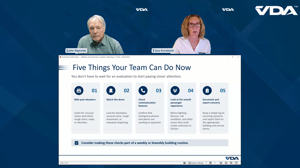
Sara Korolevich: All right, here are five moves to make now. Do you want to talk through these a little, John?
00:19:10.590 --> 00:19:50.219
John Reynolds: Yes. We're reinforcing some of the things we've talked about over the last few minutes, things we can do to get your building ready. First, evaluate your current equipment. If you have staff who can do that, great, or we can come out and look at your equipment and performance. Look at any callbacks or unscheduled repairs that are coming up. We also talked about what is practical to repair now, before the games get here, to improve the reliability of the equipment.
00:19:50.350 --> 00:20:16.949
Prepare for unexpected items. If you have equipment that goes out of service, have a plan in place to deal with unexpected outages. We also talked about future capital improvements. We're happy to help with all of these items: come out to your property, do a quick assessment, and give you an idea of where you should spend your time in preparing for this.
00:20:18.180 --> 00:20:46.069
Sara Korolevich: Exactly, and we're happy to help. You can contact HKA. Contact Stacy, and she'll set you up with a call with John to talk about your current equipment. What does it look like? Do you have any performance or reliability concerns? What does your current maintenance contract look like? Then he'll help talk through practical next steps.
00:20:46.460 --> 00:21:36.400
I'll leave that slide up for a second. If you'd like us to reach out to you, we're happy to do that as well and set up a call. We also have another quick poll for you. If you'd like VDA, HKA, or John to reach out to you, let's get that poll up there. There you go. If you want John to reach out and set something up, just click yes. We'll definitely contact you. We have your information. Stacy is the account manager at the HKA office in Irvine, and she's very responsive. She'll get back to you as well.
00:21:36.810 --> 00:21:56.130
Let's close out that poll and get to our live Q&A. I've seen a couple of questions come in. I think we can see them now. Where did I see those questions? Hold on.
00:21:58.480 --> 00:22:30.599
If you want to put your questions in the Q&A box, everyone, we appreciate that. It helps me find them quickly. Okay, someone is asking: What about the accelerated use of a system? This will most likely shorten the life of the equipment. What are your thoughts on all of this expanded use when we have high visitor traffic and the equipment is getting a lot of use? Is there anything to do to prepare for that, or to do afterward?
00:22:31.210 --> 00:22:58.180
John Reynolds: That's a good question and a valid point. With any piece of equipment, the more we use it, the more it will wear, and that's why we really need to focus on maintaining the equipment prior to this event and the increased use. We should also consult with our elevator contractor to confirm we have the right maintenance intervals and tasks in place to get the equipment as reliable as possible during this process.
00:22:58.180 --> 00:23:33.629
Many components are replaceable under maintenance. There are other items we would probably recommend upgrading afterward, such as door equipment and controllers, as part of larger upgrades. Wear will come on a little quicker, but the biggest thing up front to get us through this process is making sure we have the right maintenance in place, along with any smaller repairs we can do in advance.
00:23:36.480 --> 00:23:51.629
Sara Korolevich: Okay, thank you. I have another question here: If a property has multiple elevators, how should it prioritize which ones to look at first?
00:23:52.450 --> 00:24:19.690
John Reynolds: That's a good question. If we use a hotel as an example, the guest experience is really important. If you have main guest elevators, we want to put a lot of focus on the front-of-house elevators and escalators, because that's what your guests experience and use on a daily basis. Second to that, are the elevators providing services to your tenants and guests while they're there.
00:24:19.690 --> 00:24:39.030
The next priority would be your service and back-of-house elevators, and how quickly we can respond to your tenants' and guests' needs during their visit. But the front of house is really important, because it shapes not only their first impression but their experience the whole time they're there.
00:24:42.150 --> 00:24:53.739
Sara Korolevich: Here's another question. You covered this a little, but maybe you can expand: how can a property prepare for an unexpected outage?
00:24:54.590 --> 00:25:19.670
John Reynolds: It's a good question, and something you should work through with your team. There are other systems in your building to be concerned with, such as HVAC and lighting, but here we're focusing on your vertical transportation, your elevators and escalators. The biggest thing is making sure you have a plan in place. First, who are we going to call? Who do we need to involve?
00:25:19.670 --> 00:25:51.099
Have we put a plan in place to reduce response times and get our contractors here more quickly, if need be, for a large event? Do we have somebody on standby in advance? For example, if we're at an event venue hosting a big event, our recommendation would most likely be to have your contractor on site on standby. If we're at a large venue, such as one of the stadiums where 50,000 or 60,000 people will be attending, it's a really good idea to have somebody there on standby.
00:25:51.100 --> 00:26:23.469
If you're at a convention center or large event center, or a large hotel that also has a big convention or reception going on, look at being proactive and spending a little money to have your technician on site during these events. Having your call list in order is also important. Who is the first call, and who follows up on the calls? Once you've made the call because you need help, make sure you follow up and that it is progressing in a timely manner.
00:26:25.520 --> 00:26:57.110
Sara Korolevich: Okay, good. One last question, unless anybody else wants to put one in the Q&A box. Let's see… How early should a property begin planning a consultation with you, and what information should they start gathering ahead of a call with you?
00:26:57.310 --> 00:27:33.360
John Reynolds: That's a good question. We would like a couple of weeks' notice so we can schedule everything in a timely manner for you. What we'd really like from you is the number of elevators at your location, the approximate age of the equipment, and the manufacturer, if you have that. It's not critical that we have all of that in advance, but it helps us prepare a little better before visiting your property. Any of that information would be very helpful, and again, we can send out a checklist of items we could ask for up front, if you'd like.
00:27:34.640 --> 00:28:15.519
Sara Korolevich: Thank you, and you mentioned that checklist again. Our team is sharing some resources in the chat, including readiness checklists to help you prepare. We're also going to send the checklist John referenced earlier, the one you can use as you walk your property and see what things to look for with your equipment. It's not in the chat yet, but we'll include it in the email when we send the webinar recording and slides, so keep an eye out for that.
00:28:15.550 --> 00:28:45.460
You can always email us with any questions. Unless anybody else has questions they want to address in this live session, that is the end of our presentation. John, thank you so much for joining us and sharing the specific things our Southern California properties can do today for their escalator and elevator readiness.
00:28:46.150 --> 00:28:50.719
John Reynolds: You're welcome. I really appreciate everybody's participation and time. There were a lot of good questions. Thank you.
00:28:51.410 --> 00:28:55.460
Sara Korolevich: Thank you, everyone, for joining us. I hope you have a good day.